Leave Your Message

Factory Wholesale 98% Pure Betulinic Acid (CAS 472-15-1) Birch Bark Extract

Product Name: Betulinic Acid

Extract Source: White Birch Bark

CAS Number: 472-15-1

Molecular Formula: C₃₀H₄₈O₃

Molecular Weight: 456.71 g/mol

Melting Point: 295-298 °C

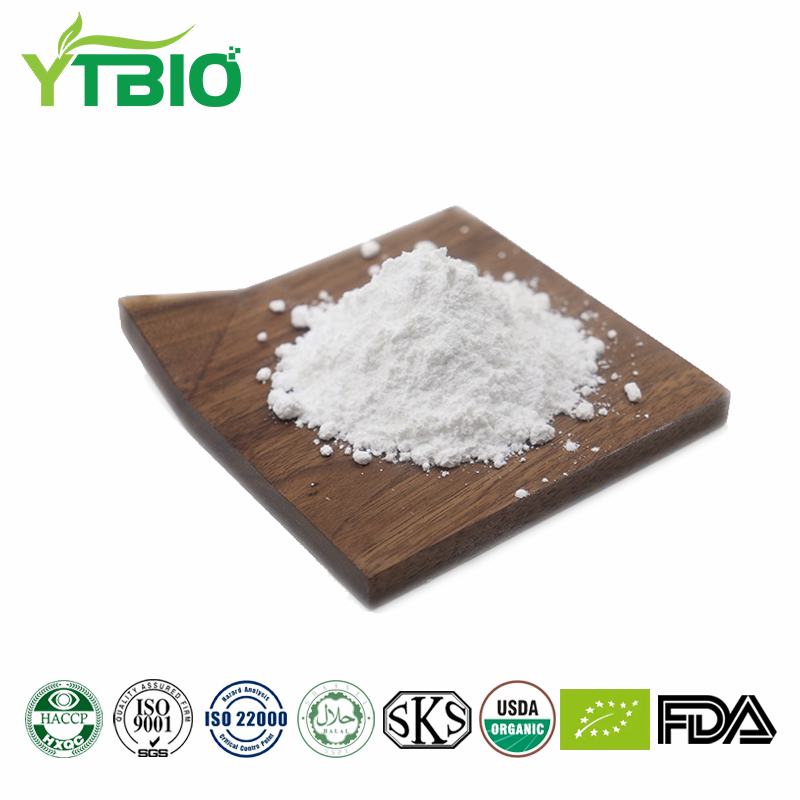
Appearance: Fine White to Off-White Crystalline Powder

    What is Betulinic Acid?

    Betulic Acid: Source, Properties, and Preparation


    Btulic acid is a naturally occurring pentacyclic triterpenoid compound first discovered in the 1990s in the bark of an evergreen plant in the Rhamnaceae family in East Africa. It is widely distributed in nature. Besides its original discovery, it can also be extracted from plants such as birch bark, syzygium wilfordii leaves, and jujube seeds, or obtained through chemical synthesis using betulin as a raw material.


    Currently, there are three main approaches to preparing betulic acid:


    -Direct extraction and isolation from natural plants. This method consumes a lot of solvent, has low yields, and is difficult to completely separate impurities, making it less commonly used in industrial production.

    -Preparation through organic synthesis using betulin as a precursor. This process is mature and stable, has been achieved on an industrial scale, and is currently the mainstream source in the market.

    -Production through microbial conversion using betulin as a precursor. This route represents a future direction for green production, but several technical bottlenecks remain to be overcome.


    Studies have shown that betulinic acid and its derivatives have significant biological activity in anti-oxidative stress and immune regulation. They have been regarded as a class of natural lead compounds with important development potential and have broad application prospects in the fields of medicine and functional raw materials.

    What are the benefits?

    1. Anti-inflammatory Effects
    Pentacyclic triterpenes generally exhibit anti-inflammatory activity. Betulic acid exhibits a mild anti-inflammatory effect at higher concentrations. Its mechanism of action may be related to inhibition of protein kinase C, rather than neurogenic inflammatory pathways. Studies have also suggested that its activity stems from interaction with glucocorticoid receptors.
    The anti-inflammatory effects of this ingredient have been validated in various in vitro and in vivo studies. Betulic acid can inhibit the production of prostaglandin E2 (PGE2), thereby alleviating inflammatory responses.
    2. Antibacterial Effects
    Studies have shown that betulic acid has some inhibitory activity against common strains of Escherichia coli, Bacillus subtilis, and Staphylococcus aureus, but its overall antibacterial activity is relatively weak. This is related to the structural characteristics of its lupane-type pentacyclic triterpenes, which are similar to hopanes found on bacterial membranes, potentially affecting its antibacterial efficacy. Currently, its potential for direct development as an antibacterial agent is limited.
    3. Antiviral Effects
    Btulic acid exhibits broad antiviral activity, particularly against HIV. It has also demonstrated efficacy against hepatitis C virus, herpes simplex virus, echovirus, and influenza virus.
    4. Antihyperlipidemic Effects
    Research has shown that betulinic acid and its derivatives can exert antihyperlipidemic effects by regulating adipokine secretion, inhibiting lipid production, and lowering triglyceride and total cholesterol levels in the blood.
    5. Antidiabetic Effects
    Btulinic acid exhibits potential value in the prevention and treatment of diabetes. It primarily acts by inhibiting the activity of α-amylase and α-glucosidase, reducing polysaccharide hydrolysis, and promoting glycogen synthesis, thereby regulating blood sugar.
    6. Antioxidant Stress Activity
    Btulinic acid has protective effects on normal tissues, which is closely related to its ability to resist oxidative stress. Experimental studies have shown that it has protective effects against ischemia-reperfusion injury in organs such as the brain, kidneys, and heart. Its mechanisms of action involve multiple pathways, including resistance to oxidative stress, resistance to nitrosative stress, and increased local blood flow.
    7. Other Potential Applications
    Recent studies have found that betulinic acid has a beneficial effect on neurodegenerative diseases such as Alzheimer's disease, alleviating neurobehavioral and cognitive impairments, reducing pro-inflammatory cytokine levels in the hippocampus, and inhibiting oxidative and nitrosative stress.

    Other studies have also shown that betulinic acid has anxiolytic activity. Its high lipid solubility allows it to cross the blood-brain barrier, and this ingredient is currently used in some anti-anxiety preparations.

    Application direction

    As a high-value natural active ingredient, betulinic acid demonstrates broad application prospects in the health and beauty sectors due to its multiple biological activities.
     
    In the health supplement industry, the core value of this ingredient lies in its anti-inflammatory properties, immunomodulatory capabilities, and antioxidant capacity. It can be used as a functional ingredient to regulate body function and enhance health.
     
    In the cosmetics sector, betulinic acid's antibacterial and anti-inflammatory properties provide scientific support for its use in skin care. It can not only be used to develop soothing formulas for sensitive skin, but also protect against environmental stressors through its antioxidant mechanisms, opening up new possibilities for product innovation.
    image-242

    product-description04

    Leave Your Message